The remarks came during a pivotal week for global AI policy. The UN's Global Dialogue on AI Governance now collects inputs from all 193 member states. The Independent International Scientific Panel on AI held its first in-person meeting in Madrid.
Meanwhile, UNCTAD's latest data paints a striking picture. The global AI market will grow from $189 billion in 2023 to $4.8 trillion by 2033. That's an economy larger than Japan's — built in a single decade. Hinton's question is simple but urgent: who gets to steer that $4.8 trillion machine?
Why Hinton Distinguishes Between Brakes and Steering
Many AI safety advocates call for pauses, temporary halts, or strict limits on training the most powerful models. Hinton wants something different. "If you ever went out with a car that had no brake, boy, you are in trouble if you go down a hill," he told UN delegates. "But you're in even more trouble if there's no steering wheel."
The difference matters. Brakes stop movement. A steering wheel directs it. Hinton isn't saying we should halt AI. He's saying we need rules that point AI toward good outcomes — rather than letting profit alone decide the path. In his view, Geoffrey Hinton AI regulation is not the enemy of progress. It's what lets progress happen safely.
Key distinction: Hinton argues that "huge investments are going into convincing the public that regulating the technology is akin to slowing down progress." He calls that framing dishonest.
This shift is important. The tech industry often treats all regulation as a brake — something that slows new ideas, costs jobs, and lets less careful players abroad pull ahead. Hinton's argument shows this is a false choice. You can speed up and steer. In fact, you must.
The $4.8 Trillion Question: Who Controls AI's Direction?
The numbers behind the Geoffrey Hinton AI regulation argument are striking. According to UNCTAD's Technology and Innovation Report 2025, the global AI market will reach $4.8 trillion by 2033. But only a handful of companies and countries can build and shape that market.
ITU Secretary-General Doreen Bogdan-Martin put it bluntly. Generative AI adoption in the Global North grows nearly twice as fast as in the Global South. "Left unaddressed, this is a second great divergence," she said. It widens the gap between countries shaping AI and those merely using it.
For anyone who cares about technology being open to everyone, this is the key issue. If only a few firms and governments hold the steering wheel, AI becomes a tool for keeping power in place — not sharing it. The promise of AI as a force for good only works if the rules ensure broad access, not just broad rollout.
- $189 billion to $4.8 trillion: Projected global AI market growth from 2023 to 2033 (UNCTAD)
- 2x adoption gap: Generative AI adoption grows nearly twice as fast in wealthy nations vs. developing ones (ITU)
- 193 member states: All UN nations now feed into the Global Dialogue on AI Governance
- Nobel + journalism: The Scientific Panel is co-chaired by computer scientist Yoshua Bengio and Nobel Peace Prize winner Maria Ressa
Three Governance Talks Converging in April 2026
Hinton's speech didn't happen alone. Three separate AI governance tracks are meeting at the same time. The timing matters. It makes April 2026 a true turning point for global AI policy.
The Digital World Conference
Co-organised by UNRISD, this event looked at AI's growing role in social safety nets, jobs, education, and green energy. The message was clear. AI rules must be transparent, fair, and rights-based. That means tackling bias, hidden algorithms, and data hoarded by a few giant firms.
The Scientific Panel on AI
The UN's Independent International Scientific Panel on AI met in person for the first time in Madrid. Co-chair Maria Ressa warned that powerful AI tools speed up "narrative warfare." They manufacture and spread lies at scale, weaken institutions, and open the door to corruption once accountability breaks down.
The Global Dialogue on AI Governance
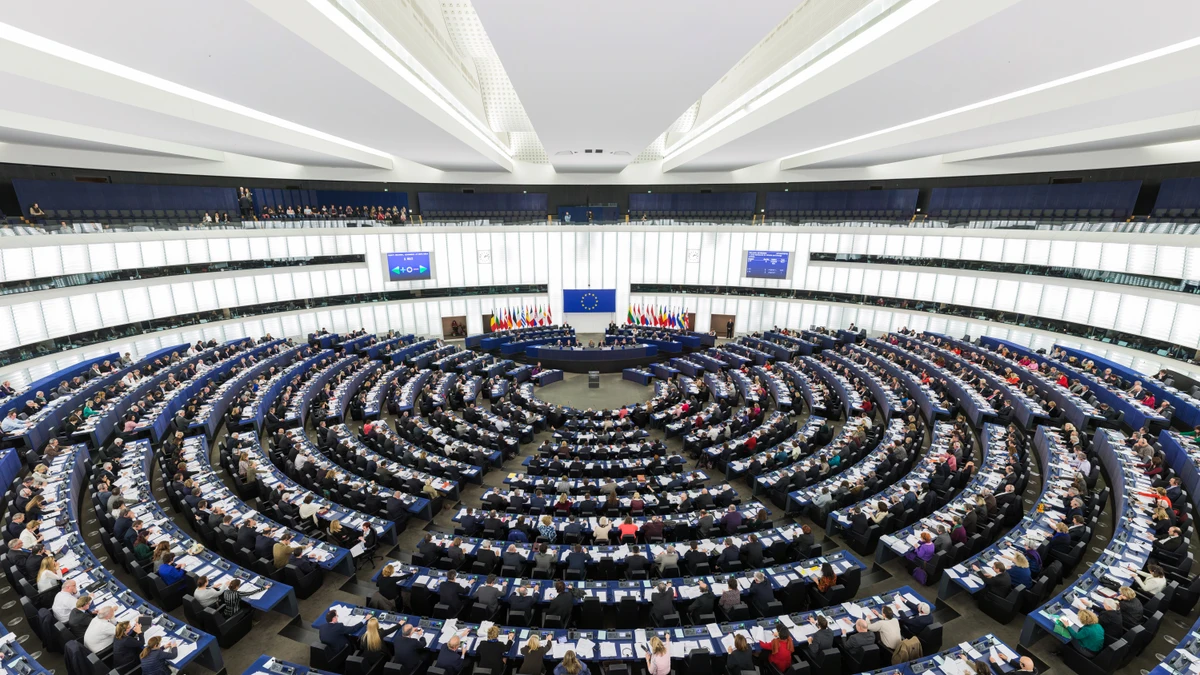
Set for July in Geneva, this initiative brings all 193 UN member states together with business, civil society, and academia. UN Special Envoy Amandeep Gill highlighted the stakes. He called it "the first ever such meeting of science and policy in a fast-moving new technology."
"The policy conversation will be science and evidence-based, pooled perspectives, scientific perspectives from a multidisciplinary lens from across the world. This is how policy discussions should be." — Amandeep Gill, UN Special Envoy for Digital and Emerging Technologies
What This Means for Technology Access
The access angle in Hinton's argument hides in plain sight. Every framework for Geoffrey Hinton AI regulation either expands or limits who benefits from AI.
Think about the current landscape.
If rules only target the biggest, most powerful models, they risk locking in the advantage of firms that already built those models. But if rules focus on access and the ability of systems to work together, they could unlock AI's potential for billions of people in poorer countries.
A recent ILO and World Bank paper covering 135 countries found a harsh truth. Workers in developing nations have enough internet access to lose jobs to AI — but not enough digital tools to gain from AI.
That gap — pain first, benefit never — is exactly the steering failure Hinton warns about. It echoes patterns already seen in how older generations struggle to access new AI tools without proper support.
The access test: Any AI governance framework should answer one question: does it increase or decrease the number of people who can use, build, and benefit from AI?
Open-source AI, low-code platforms, and user-friendly AI tools are the steering devices that could point AI toward wide benefit. But they need rules that protect them — not rules built to guard big firms' market share.
The Silence From Industry Is Telling
Major AI labs have not given real responses to Hinton's Geneva remarks. This pattern — silence or vague talk of "responsible AI" — accepts the worry without agreeing to any specific fix. That silence speaks volumes.
Hinton is the researcher whose work on backpropagation in the 1980s made modern deep learning possible. When he says the industry lacks proper oversight, the right answer is either a solid counter-argument or a real pledge to change. Neither has come.
This matters for the Geoffrey Hinton AI regulation debate. It suggests the industry stance is defensive, not helpful. The gap between what big labs say about AI safety and what they do about rules keeps growing. The trend shows no sign of reversing, and that should concern anyone tracking how AI reshapes jobs and livelihoods.
What Effective AI Governance Actually Requires
Turning Hinton's steering wheel image into real policy is harder than the image suggests. Several ideas are on the table across the converging governance tracks:
- Computing power limits that trigger safety checks before the biggest models go live
- International inspection systems for large model training runs, like the ones used for nuclear weapons oversight
- Liability rules that hold builders responsible for foreseeable harm from their AI systems
- Required disclosure of training data sources, model abilities, and known weak spots
- Access guarantees so AI tools and infrastructure reach developing countries, not just wealthy ones
The EU's AI Act offers one template. The US has executive orders and voluntary pledges. China has its own system. Most of the world has nothing binding.
Moving this conversation to the UN level reflects a growing awareness. AI's risks and rewards cross borders. One country acting alone creates a race to the bottom.
Explore 100+ AI Tools That Democratise Technology
The steering wheel works when everyone can use it. Discover tools making AI accessible to creators, businesses, and communities worldwide.
Ready to Explore 100+ AI Tools?