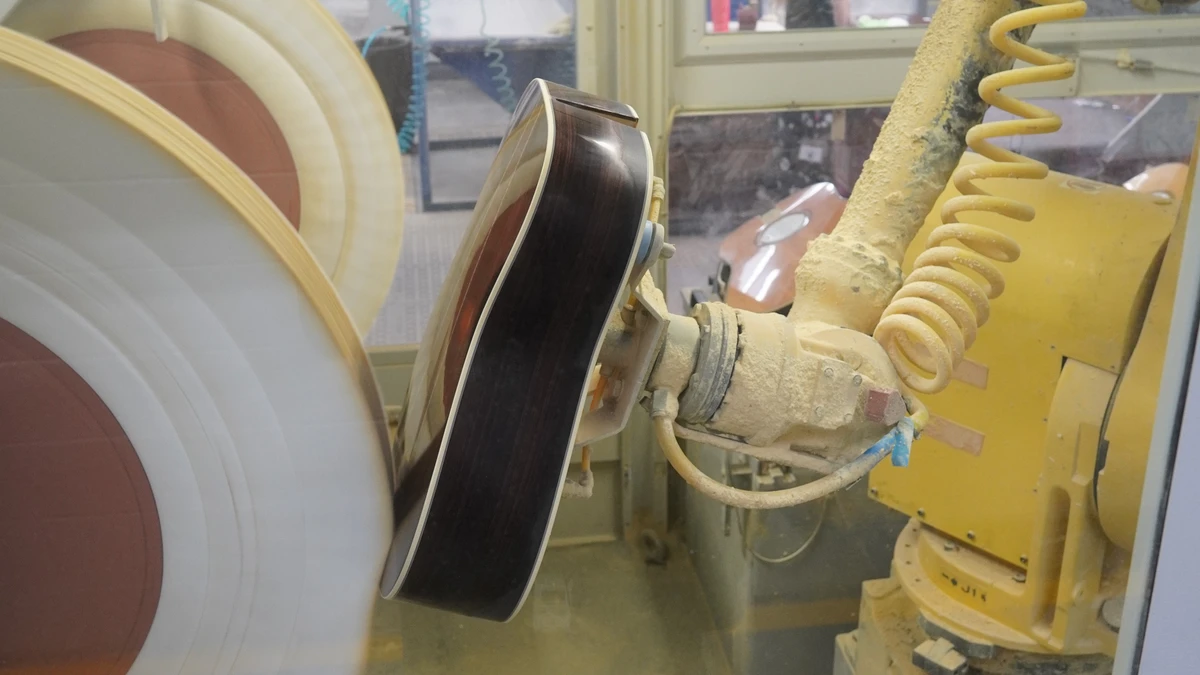
Industrial robots have existed for sixty years. They are well understood, widely available and demonstrably effective. And roughly 80% of factories in the United States still run without any robotics or automation at all.
That figure is not a story about reluctance. It is a story about who the technology was built for. Automation has been designed, priced and sold for large plants running high volumes of identical parts, and almost everybody else has been quietly excluded from it.
Why the Other Eighty Percent Stayed Manual
The facilities that never automated share a profile. As MarketScale set out in its mid-year survey, they are typically smaller, higher-mix and harder to address with traditional robotics tools.
High-mix is the crucial word. A plant making one component a million times over is the ideal case for a conventional robot, because the task never changes. A workshop making forty different things in small batches is the opposite. Every changeover means reprogramming, and reprogramming has historically meant a dedicated robotics engineer.
Then there is the building itself. A traditional industrial robot needs floor loading capacity to carry its weight and safety caging to keep people away from it. For a business in a leased unit with an ordinary concrete floor, that is a construction project before it is a technology purchase.
Add the three costs together, the robot, the engineer and the building work, and the reason 80% of US factories stayed manual becomes straightforward arithmetic rather than caution.
Teaching a Robot Instead of Programming One
The first of the shifts now changing that is called physical AI, and the practical effect is that robots can be taught by physical demonstration rather than written code.
Evan Beard, chief executive of Standard Bots, describes physical AI as closing the gap between what manufacturers want to automate and what they are actually able to automate. The consequence is that tasks previously dismissed as too variable, irregular part handling being the standard example, become viable.
The significance is not that programming gets easier. It is that the person who understands the task can now be the person who sets up the robot. In a small operation that is often the same person who owns the business, and it removes a hire that was frequently the single largest obstacle.
The supporting technologies are moving in the same direction. Fanuc, Kawasaki and Stellantis anchored industrial AI partnerships in early July built on imitation learning and digital twins, while Siemens and IFS have been integrating AI across the design, production and service phases, which reduces the handoff gaps where errors accumulate.
The Robot That Does Not Need a New Floor
The second change is physical. Fanuc America introduced the CRX-3iA in April, an ultra-lightweight collaborative robot built to extend automation to smaller tasks.
Its importance is what it does not require. A machine light enough to avoid heavy floor loading and safe enough to work without caging lowers the infrastructure requirement considerably, which means the purchase is a machine rather than a renovation.
That reframes the decision entirely. A caged industrial cell is a capital project requiring board approval and a multi-year payback. A lightweight cobot on an existing bench is closer to buying a CNC machine, and a business can try one without restructuring its balance sheet around the attempt.
ABB has been explicit about the target, aiming squarely at the 80% of facilities operating without automation. When the largest vendors start designing for the customers they previously could not serve, the market is being redefined rather than expanded.
A Vendor Landscape in Motion
The supply side is reorganising at the same time. Honeywell has been restructuring into standalone business units, billions in venture capital are flowing into AI robotics startups, and Mouser Electronics added nine manufacturers to its industrial automation portfolio in the first half of the year alone.
For a buyer this cuts both ways. More suppliers mean more competition and more options at the smaller end, which is good. It also means more complexity for procurement teams evaluating vendors with no track record, which is not.
US robotics installations are rebounding, with defence capacity buildout contributing: Velo3D tripled its production campus footprint at the start of July. But rising installation numbers do not automatically close the adoption gap, because the new units can simply be going to the US factories that already had robots.
Deployment, Not Demonstration
The broader pattern is that robotics has moved out of the demonstration phase. Coverage of CES this year described AI and robotics shifting from hype to deployment, with humanoid robotics companies unusually prominent and chipmakers showing silicon designed for running models at the edge rather than in a data centre.
Edge compute matters more than it sounds. A robot that must consult a remote server introduces latency and a dependency on connectivity, neither of which a production line tolerates well. Hardware that runs the model locally makes the machine self-contained, which is exactly what a facility without an IT department requires.
This mirrors what has already happened in software, where capability that once demanded a specialist team became something a small business could simply buy and run. The same compression showed up when agentic coding tools stopped one in three software purchases, as buyers found the capability had moved inside tools they already owned.
What Nobody Is Quantifying
There is one significant gap in all of this, and it is worth stating plainly. The mid-year survey offers no specific cost data, no return-on-investment timelines and no price comparisons between traditional automation and the new generation. The cost argument is being made qualitatively.
That absence is itself informative. When vendors have a compelling payback figure, they publish it. Describing a technology as compressing the time and cost of a first deployment without quantifying the compression usually means the numbers vary enormously by application, which they almost certainly do here.
It also means the first question is not which robot to buy. It is which single task in the building is repetitive enough, and painful enough, that removing it would be noticed. Most operators already know the answer to that, and it is usually the job nobody wants to be rostered on.
For a smaller operator, that means the case has to be built in-house rather than taken from a brochure. The practical recommendation in the survey is a good one: benchmark a cobot pilot against your current manual labour cost on one discrete task. One task, one machine, one comparison, against a number you already know.
What This Actually Changes
The reason to pay attention is not that robots are getting better. They have been getting better continuously for decades. It is that the requirements around them are collapsing, and the requirements were always what excluded smaller operators.
A robot you teach by hand does not need a programmer. A robot light enough for an existing floor does not need a building project. A robot that runs its model locally does not need an IT department. Remove those three and what remains is a machine that a business with ten employees can evaluate on the same basis as any other piece of equipment.
Whether the 80% figure for US factories moves is the measure worth watching over the next few years. If it does, it will be because automation stopped being a capital programme and became a purchase, which is how every other technology has eventually reached the people who were priced out of it.